stöia
[ˈstɔːja]
storia (anche ‘racconto’,’ vicenda’ e ‘frottola’; al plur. anche ‘cerimonie o obiezioni’)
N + Adj/AdjP (or Adj + N)
| Genoese | Italian |
|---|---|
|
stöia antiga
[ˈstɔːja (a)ŋˈtiːga] |
storia antica
|
|
stöia appascionante
[ˈstɔːja (a)paʃuˈnaŋte] |
storia appassionante
|
|
stöia commovente
[ˈstɔːja kumuˈveŋte] |
storia commovente
|
|
stöia contemporania
[ˈstɔːja kuŋteŋpuˈraɲˑa] |
storia contemporanea
|
|
stöia dramatica
[ˈstɔːja draˈmatika] |
storia drammatica
|
|
stöia fäsa
[ˈstɔːja ˈfaːsa] |
storia falsa
|
|
stöia longa
[ˈstɔːja ˈluŋga] |
storia lunga
|
|
stoia reçente
[ˈstɔːja reˈseŋte] |
storia recente
|
|
stöia tragica
[ˈstɔːja ˈtrad͡ʒika] |
storia tragica
|
|
stöia vea
[ˈstɔːja ˈveːa] |
storia vera
|
N + PrepP
| Genoese | Italian |
|---|---|
|
stöia de l’arte / da filosofia / da muxica
[ˈstɔːja de l ˈaːrte / da filuzuˈfiːa / da ˈmyːʒika] |
storia dell’arte / della filosofia / della musica
|
|
stöia de tutti i i giorni
[ˈstɔːja de ˈtytˑiː ˈd͡ʒuːrni] |
storia quotidiana
|
N + Prep + N (stöia)
| Genoese | Italian |
|---|---|
|
corso / leçion de stöia
[ˈkuːrsu / leˈsjuŋ de ˈstɔːja] |
corso / lezione di storia
|
|
corso da stöia
[ˈkuːrsu da ˈstɔːja] |
corso della storia
|
|
examme de stöia
[eˈʒamˑe de ˈstɔːja] |
esame di storia
|
N (Subj) + V (or V + N (predicative complement of the subject))
| Genoese | Italian |
|---|---|
|
unna stöia a gia
[na ˈstɔːjaː ˈd͡ʒiːa] |
una storia circola
|
V + N (DirObj or its predicative complement)
| Genoese | Italian |
|---|---|
|
arregordâ a stöia, regordâ a stöia
[aregurˈdaː (a) ˈstɔːja], [regurˈdaː (a) ˈstɔːja] |
ricordare la storia
|
|
conosce a stöia
[kuˈnuʃˑ(e) a(ː) ˈstɔːja] |
conoscere la storia
|
|
contâ de stöie à qcn.
[kuŋˈtaː de ˈstɔːj(e) a(ː) kwarkeˈdyŋ] |
raccontare storie a qcn.
(= ‘raccontare frottole a qcn.’)
|
|
contâ unna stöiaa à qcn.
[kuŋˈtaː na ˈstɔːjaː (a) kwarkeˈdyŋ] |
raccontare una storia a qcn.
|
|
creddise unna stöia
[ˈkredˑise na ˈstɔːja] |
credere a una storia
|
|
scrive unna stöia
[ˈskriːve na ˈstɔːja] |
scrivere una storia
|
|
studiâ a stöia
[styˈdjaː a ˈstɔːja] |
studiare la storia
|
|
tramandâ a stöia (à qcn.)
[tramaŋˈdaː (a) ˈstɔːjaː kwarkeˈdyŋ] |
tramandare la storia (a qcn.)
|
V + N (IndirObj or its predicative complement, or else agent complement)
| Genoese | Italian |
|---|---|
|
appartegni a-a stöia
[aparteˈɲ(j) aː ˈstɔːja] |
appartenere alla storia
|
|
intrâ inta stöia
[iŋˈtra ŋta ˈstɔːja] |
entrare nella storia
|
|
passâ inta stöia
[paˈsa ŋta ˈstɔːja] |
passare alla storia
|
Further structures
| Genoese | Italian |
|---|---|
|
fâ mille stöie
[ˈfaː ˈmilˑe ˈstɔːje] |
fare mille storie (=’fare mille cerimonie’)
|
|
sensa tante stöie
[ˈseŋsa ˈtaŋte ˈstɔːje] |
senza tante storie
(= ‘senza troppe cerimonie od obiezioni’)
|
stöia as (part of a) DirObj (including subordinate clauses)
| Genoese | Italian |
|---|---|
|
fâ sempre a mæxima stöia
[ˈfaː ˈseŋpr(e) a ˈmɛːʒima ˈstɔːja] |
fare sempre la stessa storia
(= ‘comportarsi sempre nello stesso modo’)
|
stöia as part of communicative phrasemes
| Genoese | Italian |
|---|---|
|
A l’é longa, a stöia!
[a l e ˈluŋgaː stɔːja] |
È una storia lunga!
|
|
A stöia a l’e longa!
[a stɔːjaː l ˈe ˈluŋga] |
È una storia lunga!
|
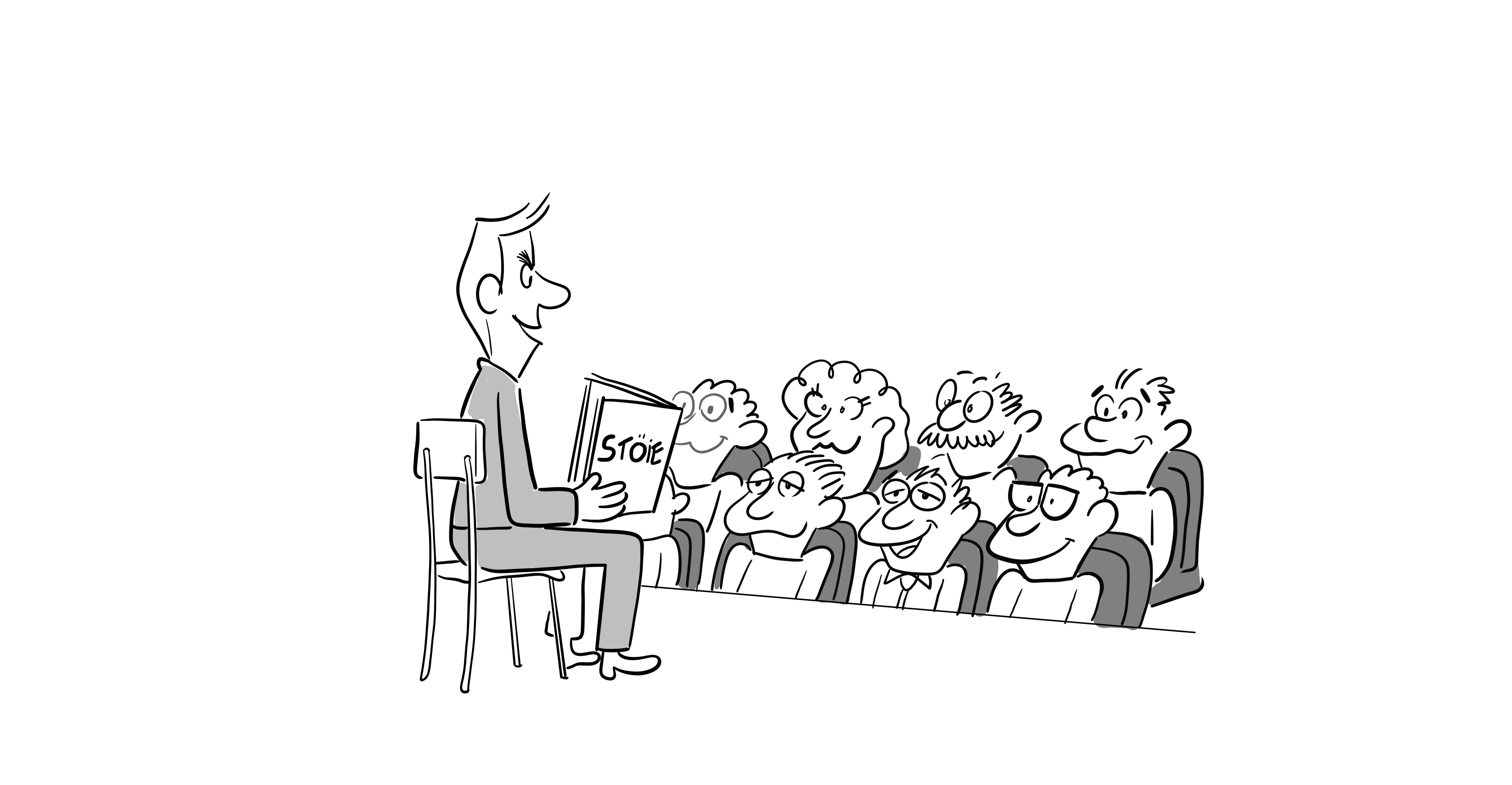
«contâ de stöie à qcn.»
[ZE] Inta figua un böxardo o conta de stöie à un pubrico, con leze un libbro intitolou “Stöie”. Pe alludde a-o scignificato frasiològico, l’òmmo o ven raffiguou con un fattoriso maiçioso e o naso longo. Tanto che çerti spettatoî pan stæti acciappæ da-e seu poule, con fâ vedde interesse e stupô, di altri tian sciù un sorveuggio con scettiçiximo evidente, con mette in dubiansa a veitæ de “stöie” stæte contæ.
[IT] Nell’immagine un uomo menzognero racconta storie a un pubblico, leggendo un libro intitolato “stöie”. Per alludere al significato fraseologico, l’uomo viene raffigurato con un sorriso malizioso e il naso lungo. Mentre alcuni spettatori sembrano catturati dalle sue parole, mostrando interesse e stupore, altri alzano un sopracciglio con scetticismo evidente, mettendo in dubbio la veridicità delle “storie” raccontate.
[EN] In this drawing, a deceitful man is reading from a book entitled “stöie” (lit. “stories”). To indicate the phraseological meaning, the man is featured with a mischievous grin and a long nose. While a number of people in the audience are listening intently, showing interest and surprise, others are clearly sceptical, raising their eyebrows and questioning whether these “stories” are true.
[DE] In der Abbildung liest ein verlogener Mann aus einem Buch mit dem Titel „stöie“ (wörtl. „Geschichten“) vor. Um die phraseologische Bedeutung wiederzugeben, hat der Mann in der Zeichnung ein schelmisches Lächeln und eine lange Nase. Während einige im Publikum gespannt zuhören und interessiert und erstaunt wirken, ziehen andere eindeutig skeptisch die Augenbrauen hoch und bezweifeln die Wahrhaftigkeit dieser „Geschichten“.
[ZE] Inta figua un böxardo o conta de stöie à un pubrico, con leze un libbro intitolou “Stöie”. Pe alludde a-o scignificato frasiològico, l’òmmo o ven raffiguou con un fattoriso maiçioso e o naso longo. Tanto che çerti spettatoî pan stæti acciappæ da-e seu poule, con fâ vedde interesse e stupô, di altri tian sciù un sorveuggio con scettiçiximo evidente, con mette in dubiansa a veitæ de “stöie” stæte contæ.
[IT] Nell’immagine un uomo menzognero racconta storie a un pubblico, leggendo un libro intitolato “stöie”. Per alludere al significato fraseologico, l’uomo viene raffigurato con un sorriso malizioso e il naso lungo. Mentre alcuni spettatori sembrano catturati dalle sue parole, mostrando interesse e stupore, altri alzano un sopracciglio con scetticismo evidente, mettendo in dubbio la veridicità delle “storie” raccontate.
[EN] In this drawing, a deceitful man is reading from a book entitled “stöie” (lit. “stories”). To indicate the phraseological meaning, the man is featured with a mischievous grin and a long nose. While a number of people in the audience are listening intently, showing interest and surprise, others are clearly sceptical, raising their eyebrows and questioning whether these “stories” are true.
[DE] In der Abbildung liest ein verlogener Mann aus einem Buch mit dem Titel „stöie“ (wörtl. „Geschichten“) vor. Um die phraseologische Bedeutung wiederzugeben, hat der Mann in der Zeichnung ein schelmisches Lächeln und eine lange Nase. Während einige im Publikum gespannt zuhören und interessiert und erstaunt wirken, ziehen andere eindeutig skeptisch die Augenbrauen hoch und bezweifeln die Wahrhaftigkeit dieser „Geschichten“.