ongia
[ˈuŋd͡ʒa]
unghia
N + Adj/AdjP (or Adj + N)
| Genoese | Italian |
|---|---|
|
onge affiæ
[ˈuŋd͡ʒ aˈfˑjɛː] |
unghie affilate
|
|
onge brutte
[ˈuŋd͡ʒe ˈbrytˑe] |
unghie sporche
|
|
onge curte
[ˈuŋd͡ʒe ˈkyːrte] |
unghie corte
|
|
onge finte
[ˈuŋd͡ʒe ˈfiŋte] |
unghie finte
|
|
onge laccæ
[ˈuŋd͡ʒe laˈkˑɛː] |
unghie smaltate
|
|
onge longhe
[ˈuŋd͡ʒe ˈluŋge] |
unghie lunghe
|
|
onge sottî
[ˈuŋd͡ʒe suˈtˑiː] |
unghie sottili
|
|
ongia incarnâ
[ˈuŋd͡ʒa (i)ŋkarˈnaː] |
unghia incarnita
|
|
ongia scciappâ
[ˈuŋd͡ʒa ʃt͡ʃaˈpˑaː] |
1a. unghia spaccata
2. unghia fessa
1b. unghia rotta
|
N + PrepP
| Genoese | Italian |
|---|---|
|
onge de man, onge de moen / onge di pê
[ˈuŋd͡ʒe de ˈmaŋ / ˈuŋd͡ʒe de ˈmweŋ / ˈuŋd͡ʒe di ˈpeː] |
unghie delle mani / unghie dei piedi
|
N + Prep + N (ongia)
| Genoese | Italian |
|---|---|
|
bruttixe de onge
[bryˈtˑiːʒe de ˈuŋd͡ʒe] |
sporcizia delle unghie
|
|
gianco de l’ongia
[ˈd͡ʒaŋku de l ˈuŋd͡ʒa] |
lunetta (dell’unghia)
|
N (Subj) + V (or V + N (predicative complement of the subject))
| Genoese | Italian |
|---|---|
|
à qcn. ghe cresce unn’ongia
[a kwarkeˈdyŋ ge ˈkreʃˑe n ˈuŋd͡ʒa] |
a qcn. cresce un’unghia
|
|
à qcn. se gh’incarnisce unn’ongia
[a kwarkeˈdyŋ se g iŋkarˈniʃˑe n ˈuŋd͡ʒa] |
a qcn. si incarnisce un’unghia
|
|
à qcn. se ghe desfa unn’ongia
[a kwarkeˈdyŋ se ge ˈdesfa n ˈuŋd͡ʒa] |
a qcn. si disfa un’unghia
|
|
à qcn. se ghe scaveña unn’ongia
[a kwarkeˈdyŋ se ge skaˈveŋˑa n ˈuŋd͡ʒa] |
a qcn. si scheggia un’unghia
|
|
à qcn. se ghe stocca unn’ongia
[a kwarkeˈdyŋ se ge ˈstɔkˑa n ˈuŋd͡ʒa] |
a qcn. si spezza un’unghia
|
|
unn’ongia a cresce torna
[n ˈuŋd͡ʒaː ˈkreʃˑe ˈtuːrna], [n ˈuŋd͡ʒa a ˈkreʃˑe ˈtuːrna] |
un’unghia ricresce
|
V + N (DirObj or its predicative complement)
| Genoese | Italian |
|---|---|
|
accurtîse e onge, ascurtîse e onge
[akˑyrˈtiːseː ˈuŋd͡ʒe], [akˑyrˈtiːse e ˈuŋd͡ʒe], [askyrˈtiːseː ˈuŋd͡ʒe], [askyrˈtiːse e ˈuŋd͡ʒe] |
accorciarsi un'unghia
|
|
affiâ e onge (à qcn.)
[aˈfˑjɛː ˈuŋd͡ʒ(e) a kwarkeˈdyŋ], [aˈfˑjaː e ˈuŋd͡ʒ(e) a kwarkeˈdyŋ]] |
affilare le unghie (a qcn.)
|
|
mangiâse e onge
[maŋˈd͡ʒaːseː ˈuŋd͡ʒe], [maŋˈd͡ʒaːse e ˈuŋd͡ʒe] |
mangiarsi le unghie
|
|
nettezzâse e onge
[neteˈzˑaːseː ˈuŋd͡ʒe], [neteˈzˑaːse e ˈuŋd͡ʒe] |
pulirsi le unghie
|
|
rosiggiâse e onge
[ruziˈd͡ʒˑaːseː ˈuŋd͡ʒe], [ruziˈd͡ʒˑaːse e ˈuŋd͡ʒe] |
mordersi le unghie
mangiarsi le unghie
|
V + N (IndirObj or its predicative complement, or else agent complement)
| Genoese | Italian |
|---|---|
|
granfignâ qcn. ò qcs. co-e onge
[graŋfiˈɲaː kwarˈkɔːsa ɔ kwarkeˈdyŋ kweː ˈuŋd͡ʒe] |
graffiare qcn. o qcs. con le unghie
|
Further structures
| Genoese | Italian |
|---|---|
|
bestia d’ongia scciappâ
[ˈbestja d ˈuŋd͡ʒa ʃt͡ʃaˈpˑaː] |
animale a unghia fessa
|
|
fâse cresce e onge
[ˈfaːse ˈkreʃˑeː ˈuŋd͡ʒe] [ˈfaːse ˈkreʃˑe e ˈuŋd͡ʒe] |
farsi crescere le unghie
lasciarsi crescere le unghie
|
ongia as (part of a) DirObj (including subordinate clauses)
| Genoese | Italian |
|---|---|
|
avei e onge longhe
[aˈvei̯ e ˈuŋd͡ʒe ˈluŋge] |
avere le mani lunghe
(= ‘essere propenso al furto’)
|
|
taggiâ e onge à qcn. [disus.]
[taˈd͡ʒzˑɛː ˈuŋd͡ʒ(e) a kwarkeˈdyŋ], [taˈd͡ʒzˑaː e ˈuŋd͡ʒ(e) a kwarkeˈdyŋ] |
tarpare le ali a qcn.
(= ‘impedire a qcn. di compiere ciò che desidera, o limitarne le possibilità’)
|
ongia as (part of an) IndirObj (including subordinate clauses)
| Genoese | Italian |
|---|---|
|
avei qcn. inte onge
[aˈvei̯ kwarkeˈdɥ iŋte ˈuŋd͡ʒe] |
avere qcn. fra le proprie grinfie
(= ‘avere qcn. alla propria mercé’)
|
|
cazze inte onge à qcn. ò de qcn.
[ˈkazˑe (i)ŋte ˈuŋd͡ʒ(e) a kwarkeˈdyŋ ɔ de kwarkeˈdyŋ] |
cadere fra le grinfie a qcn. o di qcn.
(= ‘ritrovarsi sotto il controllo o la presenza minacciosa di una qcn.’)
|
|
pagâ (qcn. ò qcs.) in sce l’ongia
[paˈgaː kwarkeˈdyŋ ɔ kwarˈkɔːsa (i)ŋ ʃe l ˈuŋd͡ʒa] |
pagare (qcn. o qcs.) sull’unghia
(= ‘pagare immediatamente e sul momento, senza dilazioni d’alcun tipo’)
|
|
scappâ d’inte onge à qcn. ò de qcn.
[skaˈpˑaː d iŋte ˈuŋd͡ʒe a kwarkeˈdyŋ ɔ de kwarkeˈdyŋ] |
scappare dalle grinfie di qcn.
(= ‘riuscire a liberarsi dal controllo o dalla presenza minacciosa di qcn.’)
|
|
tiâ de l’ongia [fam.]
[ˈtjaː de l ˈuŋd͡ʒa] |
rubacchiare
sgraffignare
|
ongia as part of further idioms
| Genoese | Italian |
|---|---|
|
no stimmâ qcn. ò qcs. un neigro d’ongia
[nu stiˈmˑaː kwarkeˈdyŋ ɔ kwarˈkɔːsa (i)ŋ ˈnei̯gru d ˈuŋd͡ʒa] |
non avere una minima stima per qcn. o qcs.
|
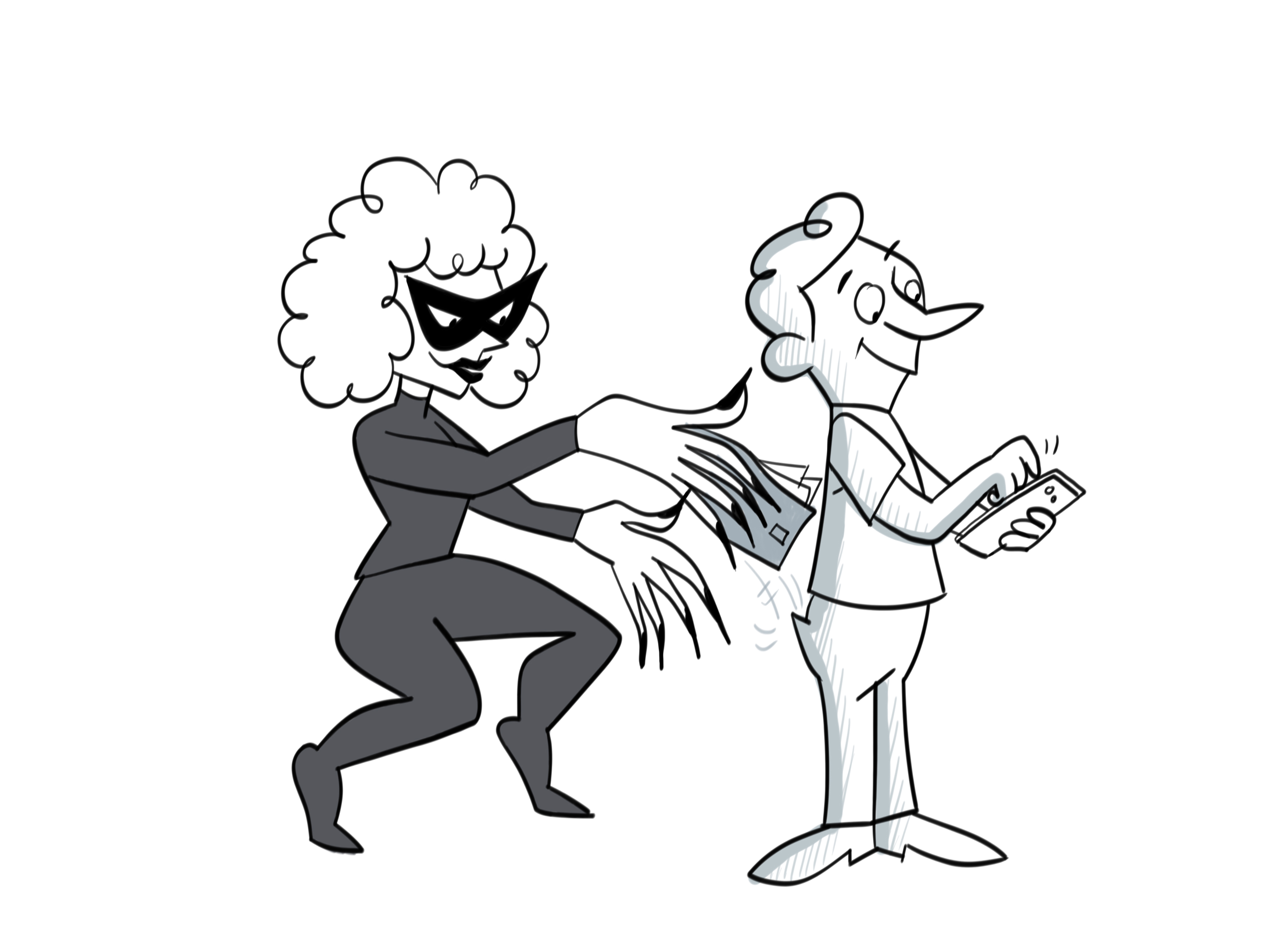
«avei e onge longhe»
[ZE] St'esprescion chì in zeneise a l'indica o fæto de tiâ a-o robariçio, e coscì se vedde comme unna laddra a l'arröba o portafeuggi d'un òmmo. St'açion chì a vëgne indicâ in zeneise comme "avei e onge longhe", e coscì e onge da laddra vëgnan raffiguæ d'unna gran longhessa.
[IT] Questa espressione in genovese indica il fatto di essere propensi al furto, per cui si vede come una ladra ruba il portafoglio di un signore. Tale atto viene reso in genovese come ‘avere le unghie lunghe’, per cui le unghie della ladra vengono rappresentate di una notevole lunghezza.
[EN] In Genoese, this expression indicates that someone has a tendency to steal things. You see a thief with extraordinarily long fingernails stealing a man’s wallet because this expression literally translates as “having long fingernails”.
[DE] Dieser genuesische Ausdruck bezeichnet die Tatsache, dass jemand einen Hang zum Stehlen hat. Deshalb sieht man auf dem Bild eine Diebin, die einem Mann das Portemonnaie stiehlt. Da die genuesische Wendung wörtlich „lange Fingernägel haben“ bedeutet, wird die Diebin mit außergewöhnlich langen Fingernägeln dargestellt.
[ZE] St'esprescion chì in zeneise a l'indica o fæto de tiâ a-o robariçio, e coscì se vedde comme unna laddra a l'arröba o portafeuggi d'un òmmo. St'açion chì a vëgne indicâ in zeneise comme "avei e onge longhe", e coscì e onge da laddra vëgnan raffiguæ d'unna gran longhessa.
[IT] Questa espressione in genovese indica il fatto di essere propensi al furto, per cui si vede come una ladra ruba il portafoglio di un signore. Tale atto viene reso in genovese come ‘avere le unghie lunghe’, per cui le unghie della ladra vengono rappresentate di una notevole lunghezza.
[EN] In Genoese, this expression indicates that someone has a tendency to steal things. You see a thief with extraordinarily long fingernails stealing a man’s wallet because this expression literally translates as “having long fingernails”.
[DE] Dieser genuesische Ausdruck bezeichnet die Tatsache, dass jemand einen Hang zum Stehlen hat. Deshalb sieht man auf dem Bild eine Diebin, die einem Mann das Portemonnaie stiehlt. Da die genuesische Wendung wörtlich „lange Fingernägel haben“ bedeutet, wird die Diebin mit außergewöhnlich langen Fingernägeln dargestellt.